What Is an Impacted Canine?
Sometimes, a canine tooth does not erupt into the mouth as expected and remains trapped within the jawbone. This condition is known as an impacted canine. The upper canine teeth (maxillary canines) are among the most commonly impacted teeth after wisdom teeth.
At JDental Specialists, Dr Eugene, our orthodontist, provides comprehensive assessment and management of impacted canine cases, helping patients achieve a healthier bite and a more confident smile.
This may occur because:
- There is insufficient space in the dental arch.
- The tooth is positioned abnormally within the jaw.
- Baby teeth remain in place for too long.
- Nearby teeth block the eruption path.
- Genetic or developmental factors affect tooth eruption.
Many patients are unaware they have an impacted canine until it is identified during a dental examination or X-ray.
How Does Dr Eugene Diagnose an Impacted Canine?
Dr Eugene performs a detailed evaluation that may include:
- Clinical examination
- Digital dental X-rays
- Panoramic radiographs (OPG)
- Cone Beam CT (CBCT) scans when necessary
A CBCT scan provides a three-dimensional view of the impacted tooth, allowing Dr Eugene to accurately assess:
- The position of the canine
- Its relationship to neighbouring teeth
- Any risk of root resorption of adjacent teeth
- The safest and most predictable treatment approach
Early diagnosis often improves treatment outcomes and may reduce treatment complexity.
Exposure and Bonding: Guiding the Canine into Place
Through a specialised technique known as exposure and bonding, Dr Eugene can gently uncover and guide the hidden tooth into its proper slot in your smile.
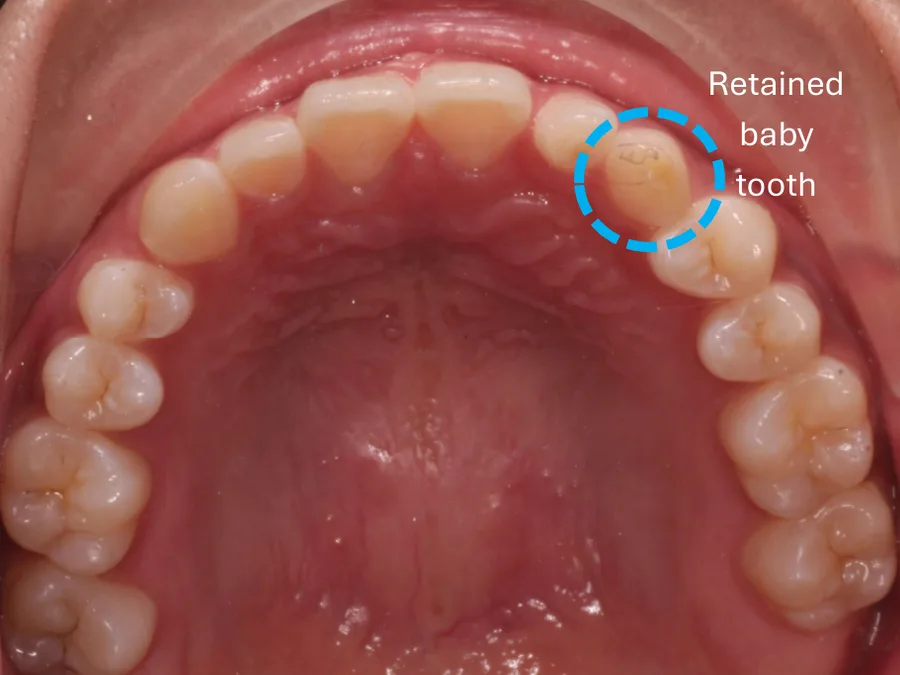
Step 1: Removing the Baby Tooth & Exposing the Canine
Dr Eugene first coordinates the extraction of the retained baby tooth to clear a pathway in the dental arch. Next, the hidden permanent canine is gently uncovered (exposed), and a tiny orthodontic button is attached directly to the surface of the tooth.
Step 2: Gentle Traction & Guidance
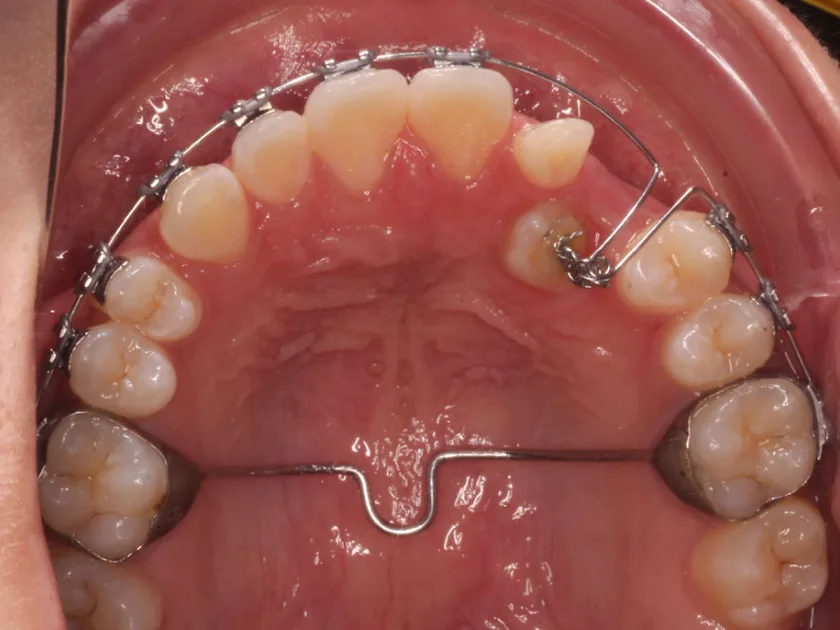
To guide the tooth into place, Dr Eugene places a Transpalatal Arch (TPA), a supportive wire across the roof of the mouth, to keep the back teeth stable. Using light, controlled orthodontic tension attached to the tiny button, the impacted tooth is gradually and safely pulled away from the palate and directed toward the gap in the arch.
Step 3: Seamless Integration & A Balanced Smile
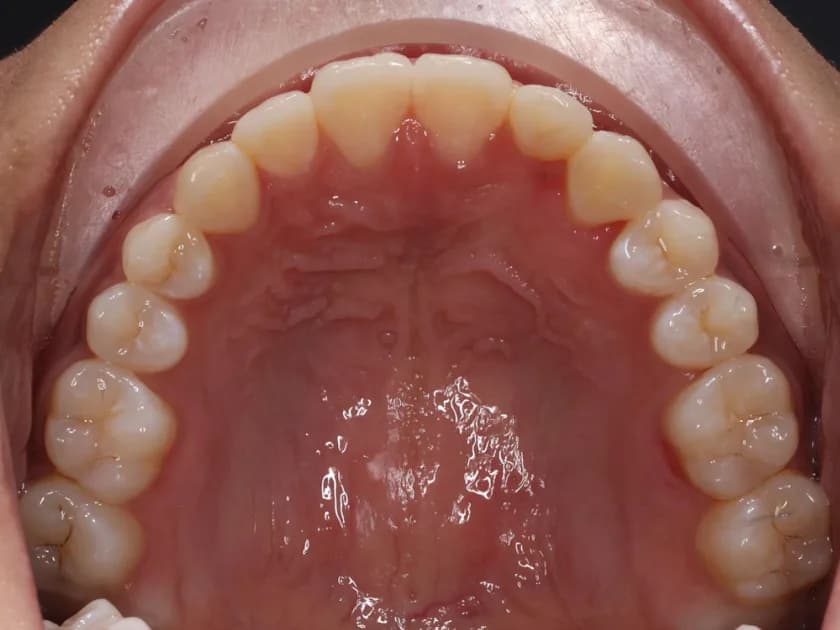
Once the canine reaches the arch, standard braces line it up perfectly with the neighbouring teeth. The end result is a beautifully aligned, symmetrical smile with full functional support.
Frequently Asked Questions
Can an impacted canine come down on its own?
In some younger patients, removing the baby canine and creating sufficient space may encourage the permanent canine to erupt naturally. However, this depends on the position of the impacted tooth and the patient's age.
Is surgery always required?
Not always. Some impacted canines may erupt after orthodontic space creation and appropriate monitoring. Others require surgical exposure to assist eruption.
How long does impacted canine treatment take?
Treatment duration varies depending on the location of the impacted tooth and the complexity of the case. Many cases require several months to a few years of orthodontic treatment.
Is impacted canine treatment painful?
Most patients experience only mild discomfort after orthodontic adjustments or surgical exposure. Any discomfort is usually temporary and manageable.
Can adults still treat impacted canines?
Yes. Many adults successfully undergo impacted canine treatment. A comprehensive assessment by Dr Eugene can determine whether orthodontic alignment is feasible and beneficial.
Concerned About a Missing Canine Tooth?
If your child or teenager has a missing canine tooth, retained baby canine, or delayed tooth eruption, early assessment is recommended.
Key Takeaway: Dr Eugene, Orthodontist at JDental Specialists, provides comprehensive evaluation and treatment planning for impacted canine cases, helping patients achieve healthy function, proper alignment, and confident smiles. Book a consultation today to find out the most suitable treatment options for you or your child.