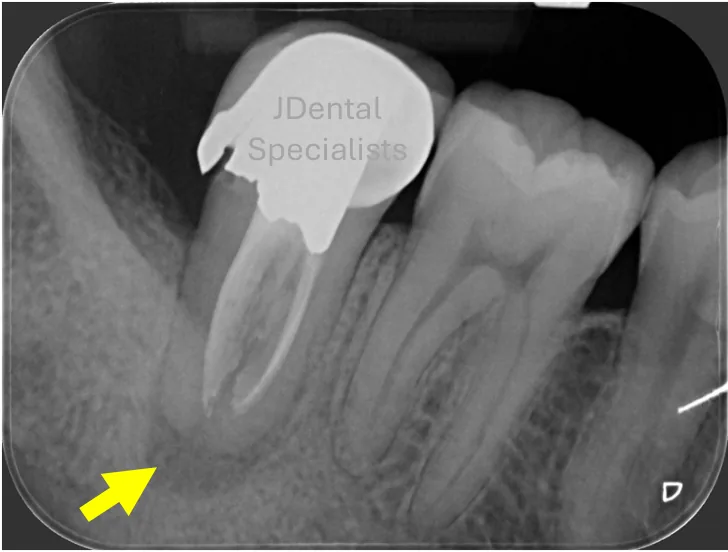
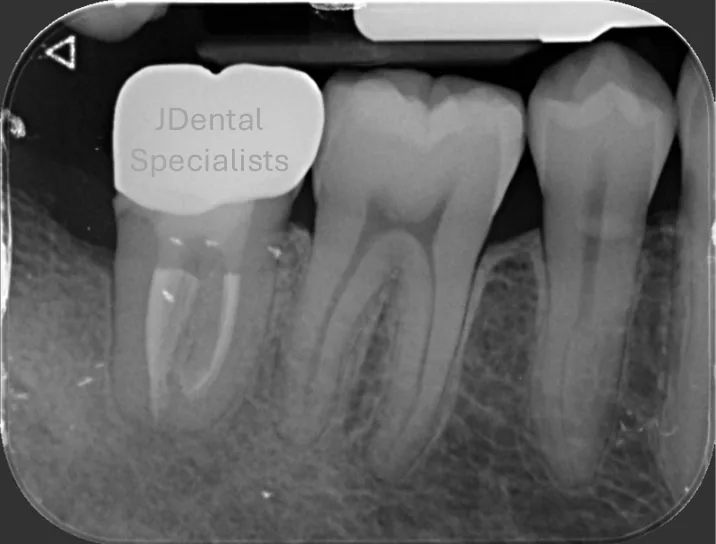
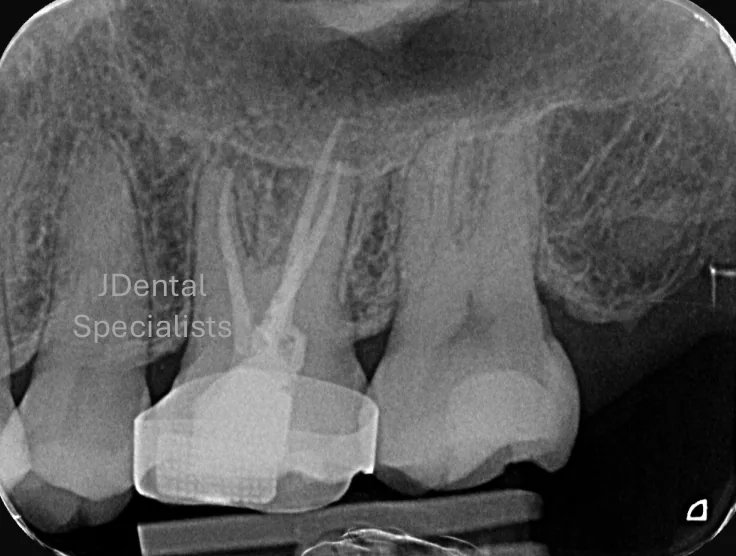
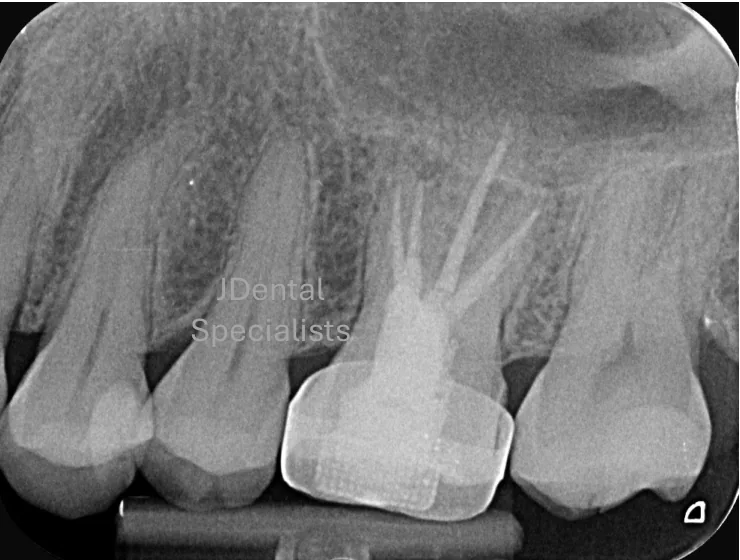
A root canal treatment can sometimes fail if bacteria remain inside the root canal system, the canal anatomy is particularly complex, a new infection develops, or the tooth becomes cracked or damaged after treatment. Failure does not always mean the tooth needs to be extracted, and many teeth can still be successfully saved.
What are the signs of a failed root canal?
Common signs may include:
Persistent or recurring toothache
Swelling of the gums or face
Tenderness when biting or chewing
A pimple-like swelling (gum boil) near the tooth
Persistent infection seen on an X-ray, even when no symptoms are present
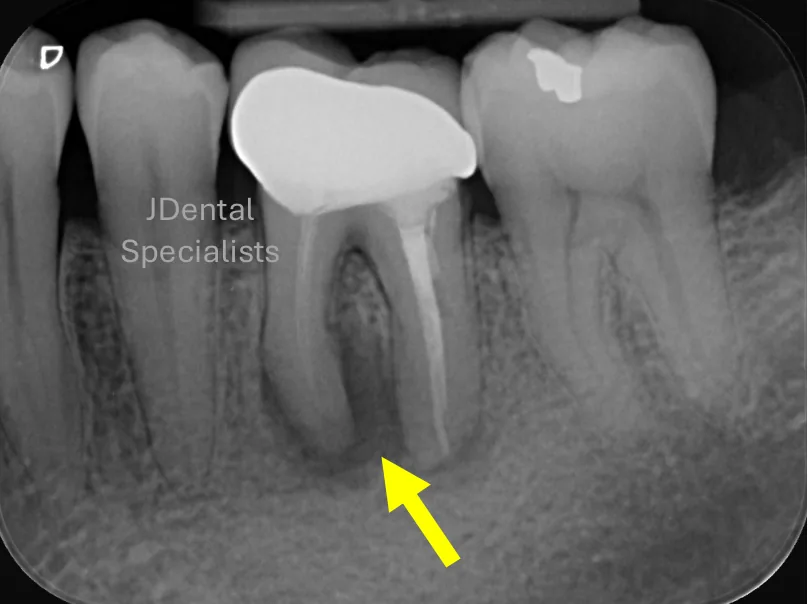
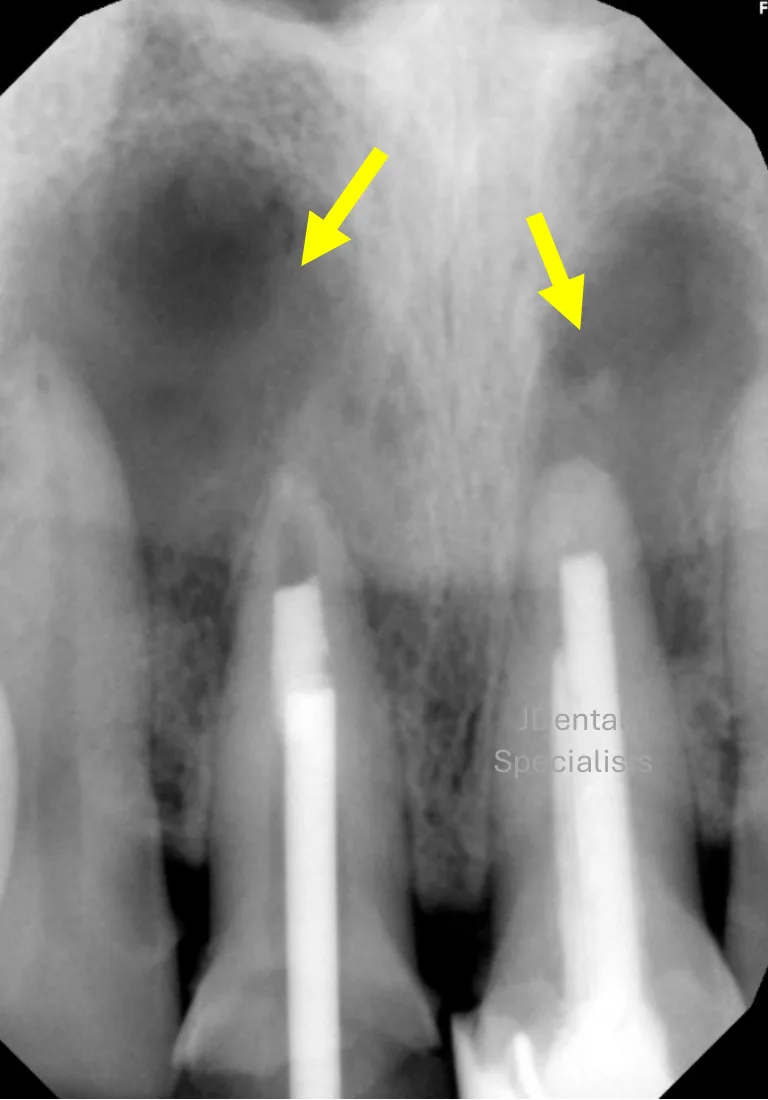
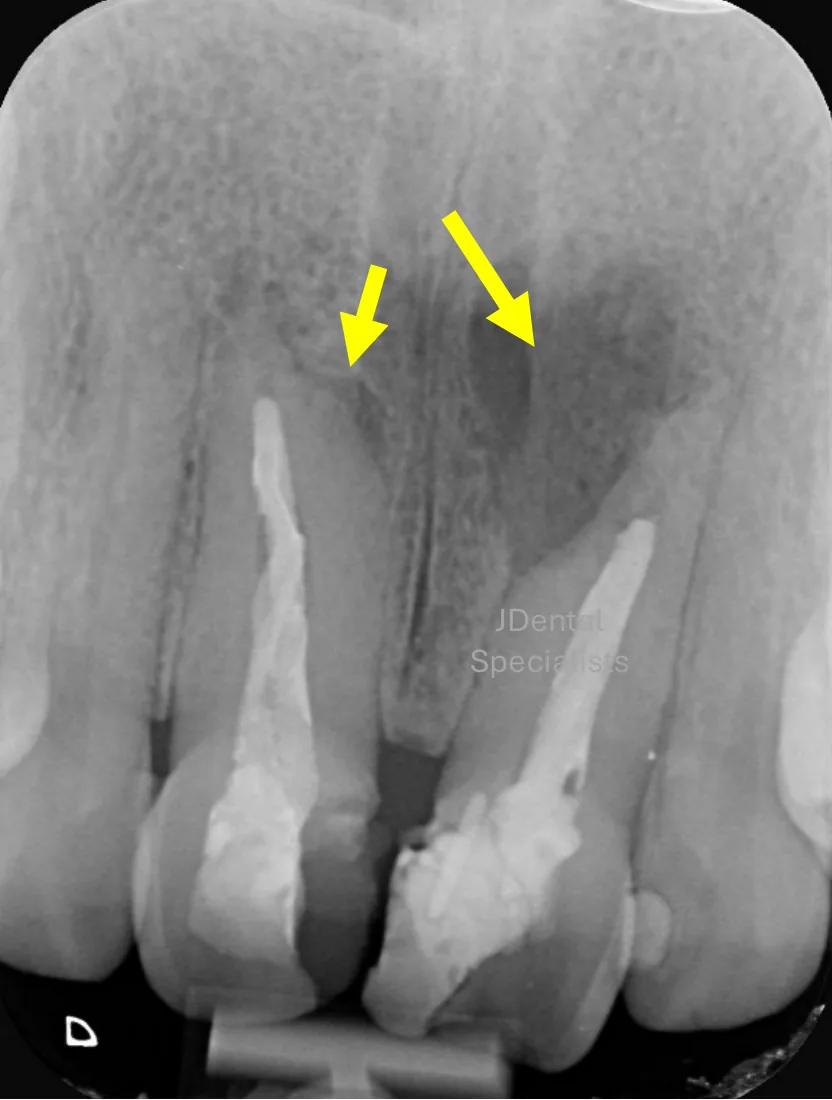
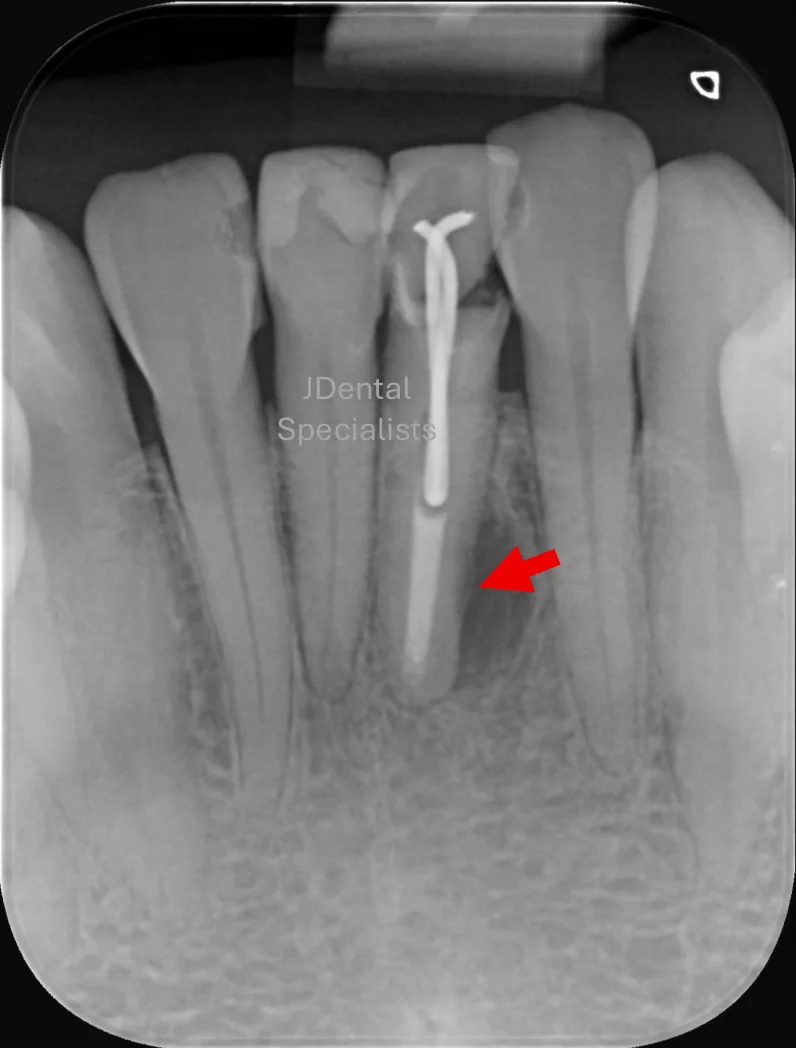
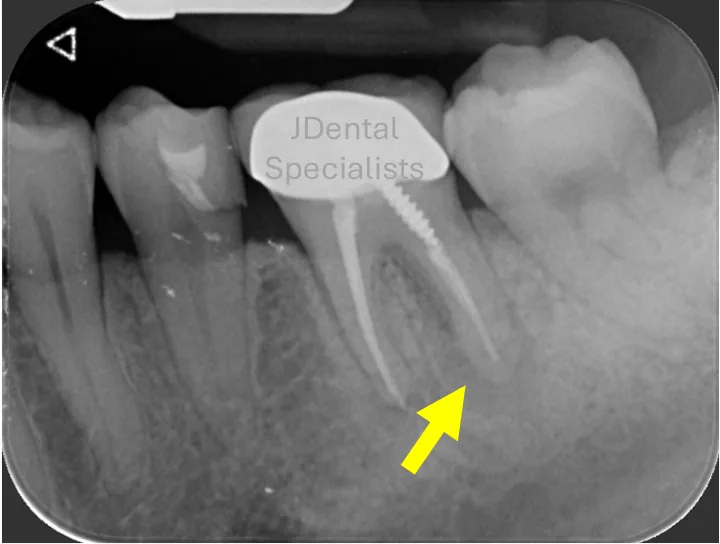
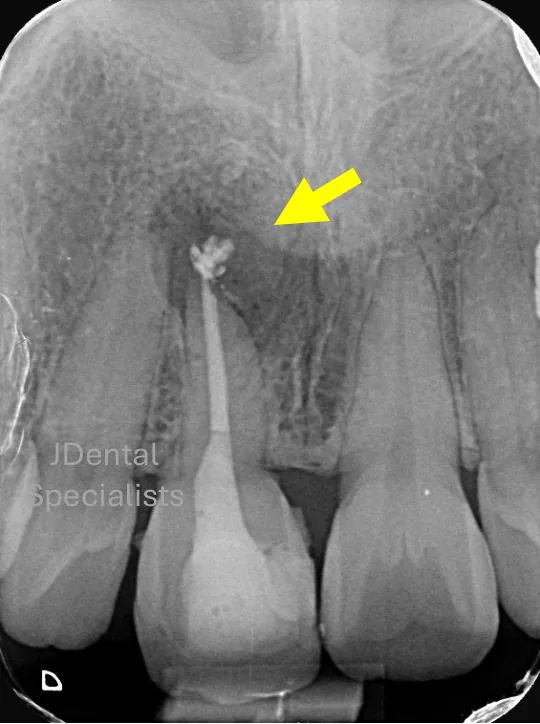
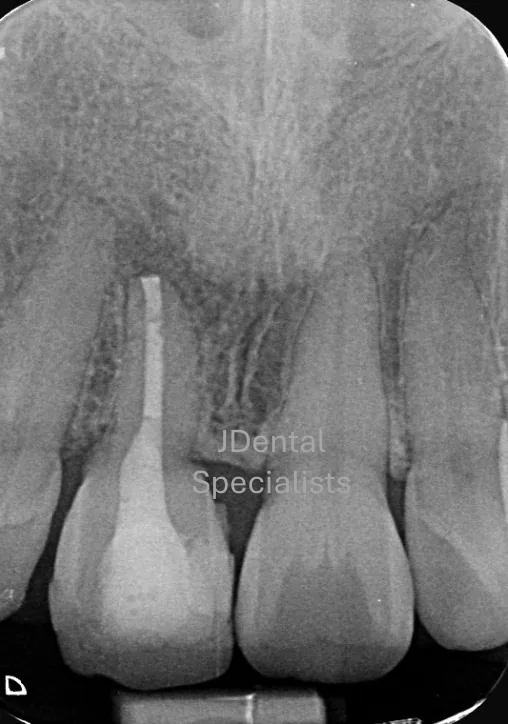
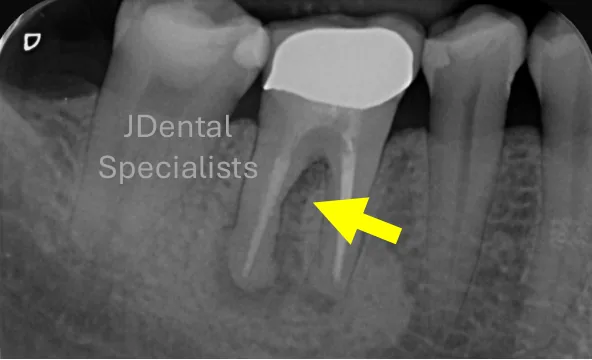
A failed root canal treatment may lead to a persistent infection. On a radiograph (X-ray), this often appears as an area of bone loss (yellow arrow) around the root apex. In most cases, the infection persists due to inadequate cleaning and sealing during a previous root canal treatment or bacterial leakage through a compromised restoration.
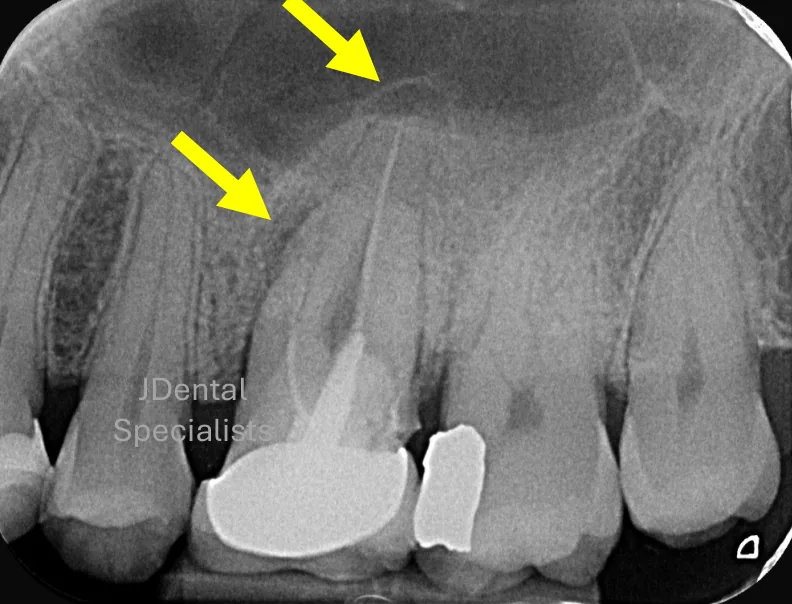
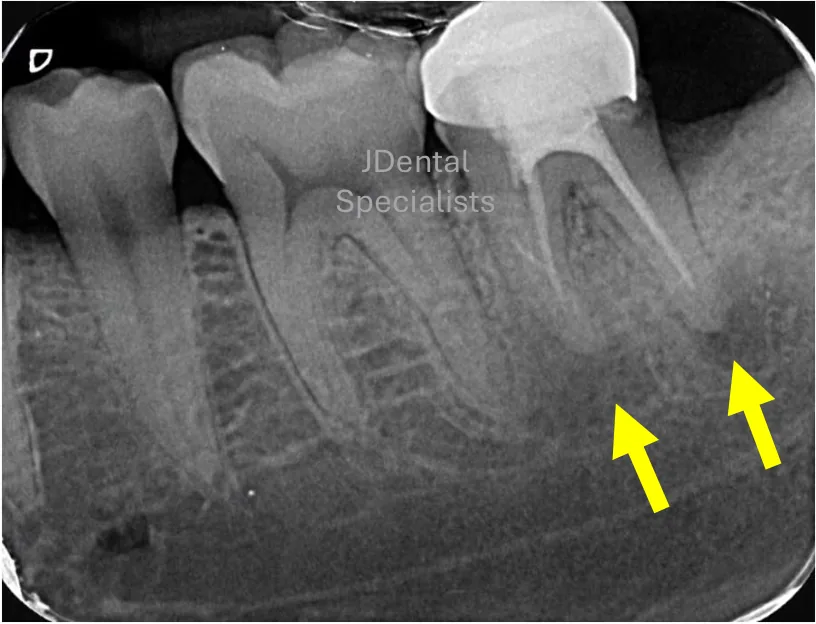
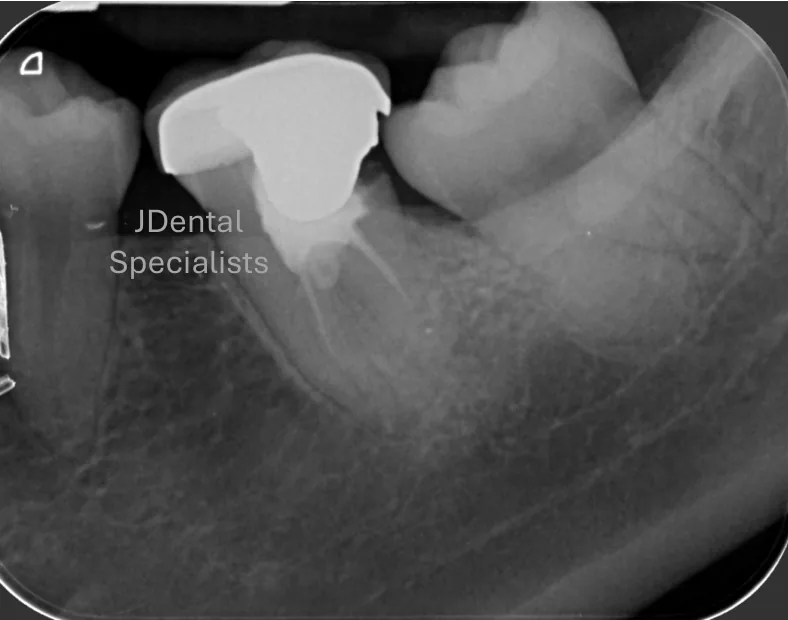
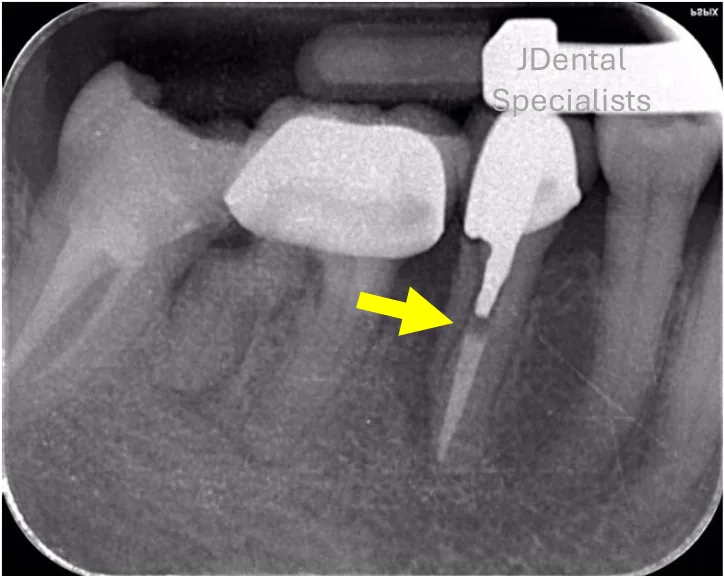
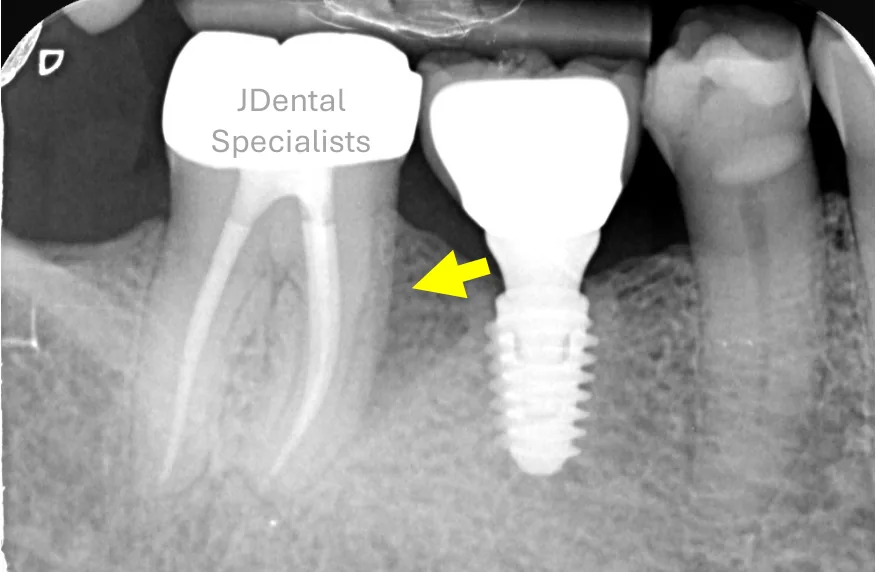
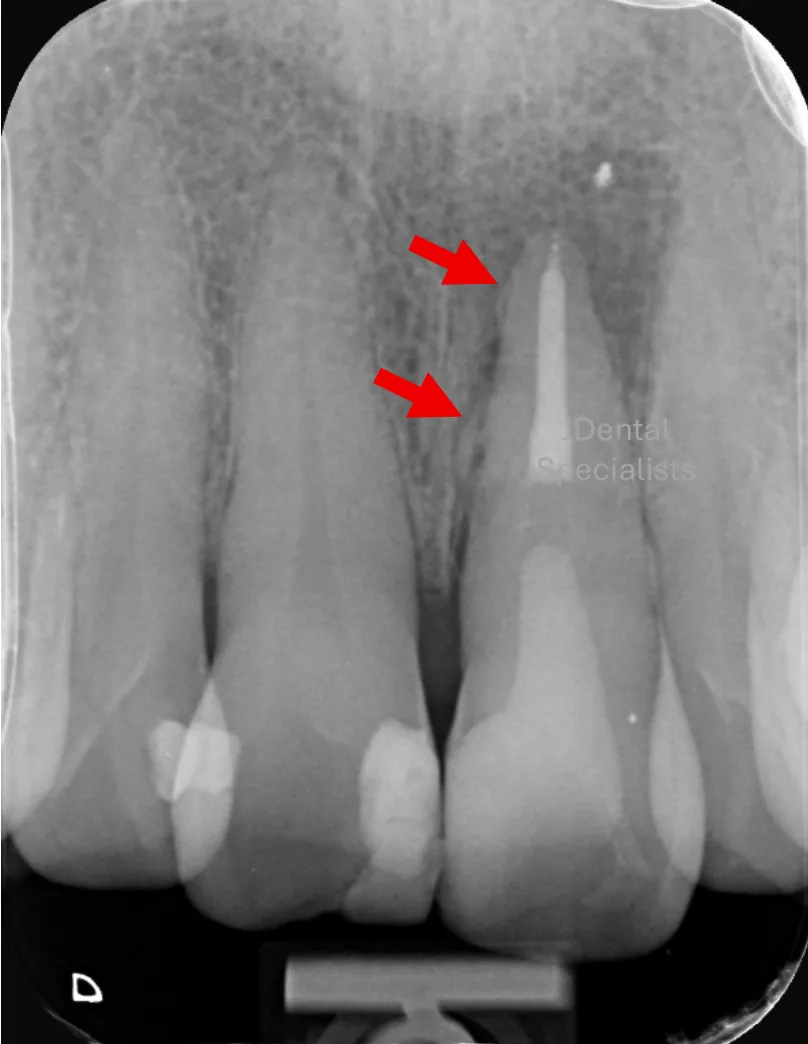
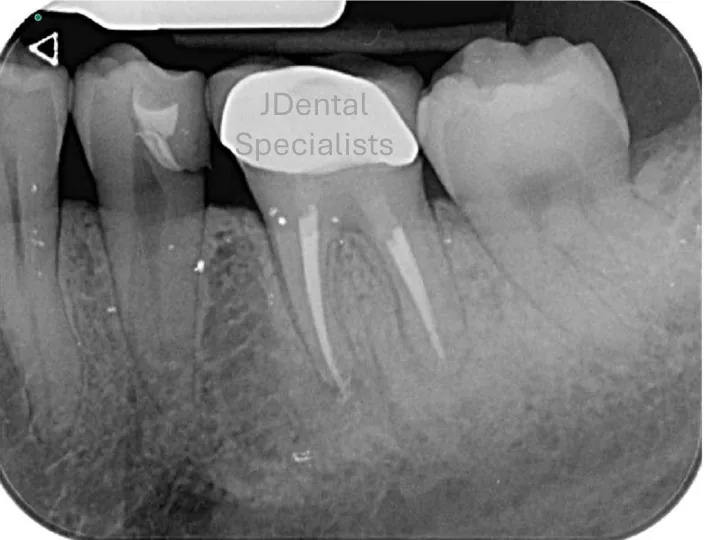
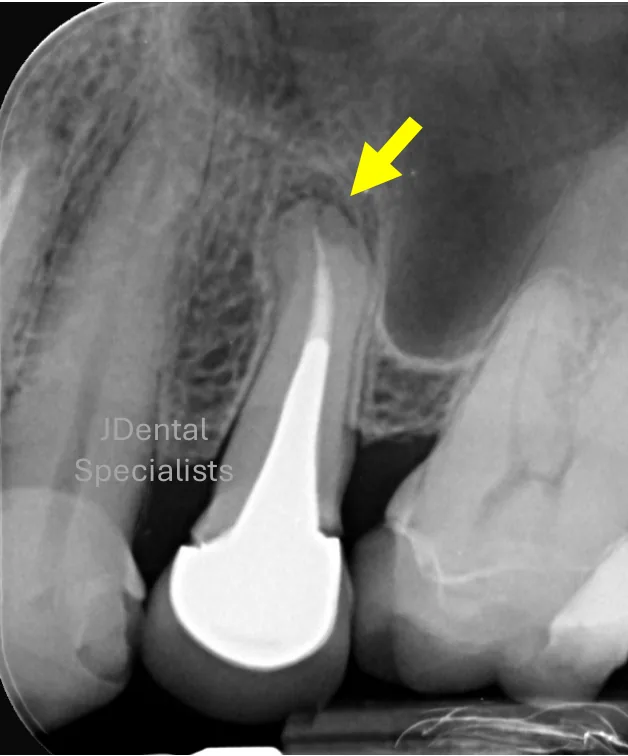
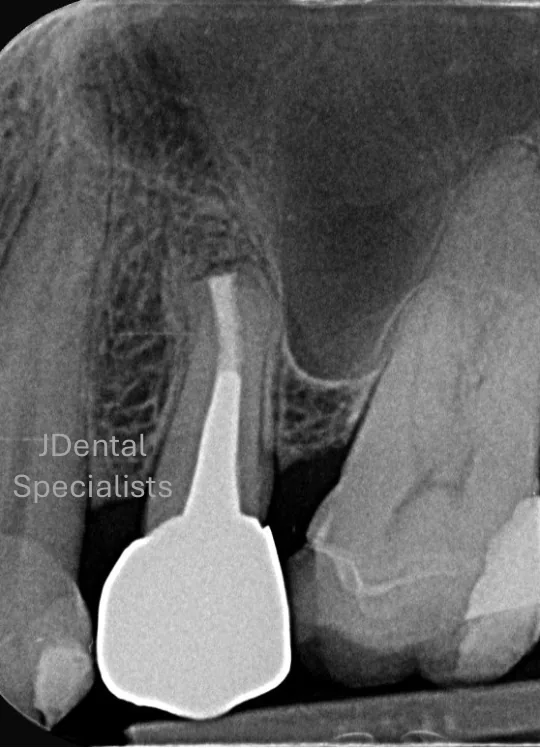
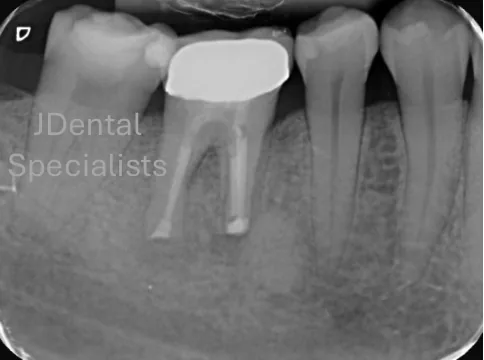
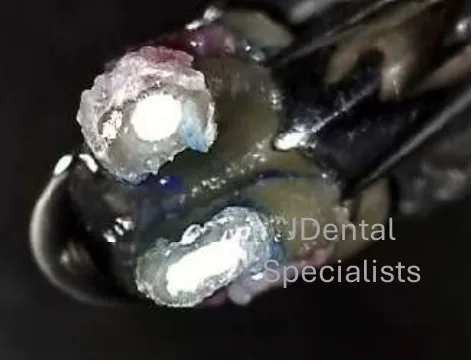
Occasionally, a persistent infection may be caused by damage to the tooth root rather than the root canal treatment itself. Examples include a vertical root fracture (yellow arrow), a crack extending into the root (yellow arrow), or a cemental tear (red arrows). Teeth affected by these conditions generally have a guarded to poor prognosis and may ultimately require extraction. These defects can be difficult to diagnose because they are often not clearly visible on routine clinical examination or radiographs. Accurate diagnosis may require a combination of advanced imaging, magnification, clinical testing, and specialist assessment.
Can the tooth still be saved?
In many cases, yes. An endodontist can assess the cause of failure and recommend the most appropriate treatment. Preserving your natural tooth is usually the preferred option whenever possible.
What treatment options are available?
The best treatment depends on why the root canal has failed. After a thorough assessment, our endodontists may recommend:
Root canal retreatment
A non-surgical procedure that removes the previous root filling material, disinfects the canals, and re-treats the tooth to eliminate persistent infection.
Before
After
This tooth had a persistent infection caused by a failed root canal treatment, resulting in bone loss (yellow arrow) around the root tip and the presence of a gum boil. The tooth was successfully treated with root canal retreatment, allowing the existing crown to be retained. After removing the metal post and old root canal filling material, the canals were carefully cleaned, disinfected, and refilled. At the 6-month review, the infection had healed, and healthy bone had regenerated around the root tip.
Before
After
Although the previous root canal filling appeared satisfactory on the X-ray, a persistent infection (yellow arrow) was still present around the root tip. One possible cause was bacterial leakage through a defective crown restoration. Following root canal retreatment, the infection resolved and healthy bone regenerated around the root apex, demonstrating successful healing.
Before
After
The patient experienced pain triggered by hot drinks despite having previously undergone root canal treatment. Root canal retreatment was performed by our endodontist, who identified and treated a missed canal, one of the most common causes of root canal treatment failure. Following retreatment, the symptoms resolved completely, and the tooth was successfully preserved.
Apicoectomy (root-end surgery)
An endodontic surgical procedure that treats infection around the root tip when conventional root canal retreatment is not feasible or unlikely to be successful.
Before
After
Despite a satisfactory root canal retreatment, the gum boil persisted, suggesting ongoing infection. Endodontic microsurgery was performed to eliminate the source of infection and preserve the tooth. At the 3-month follow-up, healing was evident, with partial resolution of the lesion around the root apex. The tooth was successfully retained.
Before
After
This root canal treated tooth developed a persistent infection, resulting in bone loss (yellow arrow) around the root tip. Because the tooth contained a large metal cast post, conventional root canal retreatment was not possible without significant risk to the tooth. Instead, endodontic surgery was performed to directly remove the infection and promote healing. At the 1-year follow-up, the area showed successful healing, with healthy bone regeneration around the root apex.
Intentional replantation
A highly specialized procedure in which the tooth is carefully removed, treated outside the mouth, and replanted into its original socket. This may be considered when other treatment options are not suitable.
Before
After
Before treatment, the patient presented with a gum boil (sinus tract) and bone loss (yellow arrow) around the root apex. Based on the clinical and radiographic findings, a vertical root fracture was suspected. However, conventional endodontic surgery was not feasible because of the patient's limited mouth opening. Intentional replantation was therefore performed, allowing direct inspection of the root surface outside the mouth. During the procedure, a vertical root fracture was ruled out. The source of infection was treated, and the tooth was replanted. Follow-up radiographs demonstrated successful healing, with resolution of the infection and re-establishment of healthy bone around the root apex.
Extraction
Considered only when the tooth cannot be predictably saved or restored.
How do I know which treatment is right for me?
A comprehensive assessment, including clinical examination and 3D CBCT imaging when indicated, helps determine the cause of failure and the most appropriate treatment. Factors such as the quality of the previous treatment, the extent of infection, and the condition of the tooth will all be carefully evaluated.
Why should I see an endodontist?
An endodontist is a dental specialist with advanced training in diagnosing and managing complex root canal problems. Specialist care can significantly improve the chances of saving teeth that might otherwise be lost.
How can JDental Specialists help?
At JDental Specialists, our endodontist (root canal specialist) provides advanced endodontic treatments, including root canal retreatment, apicoectomy, and intentional replantation. Using enhanced magnification, modern imaging technology, and evidence-based techniques, our goal is to preserve your natural teeth whenever possible and provide long-term treatment success.
Key Takeaway:Think your root canal may have failed? Contact JDental Specialists for a comprehensive evaluation and explore your options for saving your natural tooth.