Stainless Steel Crowns for Children
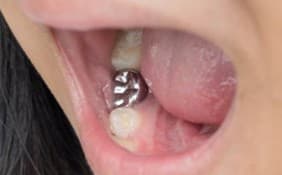
A stainless steel crown restoring a child's back tooth.
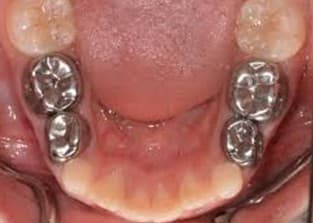
Multiple stainless steel crowns providing full coverage on lower teeth.
What is a Stainless Steel Crown?
It is a preformed metal cap that covers the entire tooth. It restores a tooth damaged by decay or fracture, providing strength and protection.
Why might my child need one?
- Extensive decay that cannot be restored with a filling.
- Decay involving 2 or more surfaces of the tooth.
- Tooth has undergone pulp treatment (pulpotomy or pulpectomy).
- Tooth is fractured or severely worn down.
- To protect the tooth until it naturally falls out.
Benefits of Stainless Steel Crowns
- Strong and durable — lasts until the tooth falls out naturally.
- Protects the tooth from further decay and damage.
- More cost-effective than traditional restorations.
- Can be placed quickly in a single appointment.
Before & After
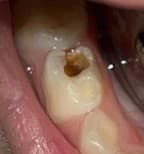
Before: Tooth with extensive decay.
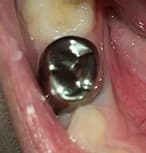
After: Crown successfully placed.
The Procedure
- Decay is removed as needed.
- The crown is fitted and cemented.
- Your child can resume normal eating and drinking right after.
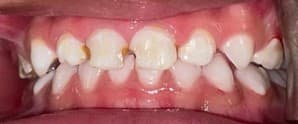
Before: Rampant caries on front teeth.
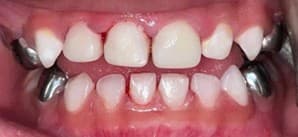
After: Crowns placed on front teeth.
Aftercare Advice
- Mild discomfort for a few days to a week is normal; children's pain relief can help.
- Anterior open bite (front teeth not touching) for up to a week is normal — your child's bite will settle naturally.
- Avoid sticky or hard foods for the first day.
- Continue attending regular check-ups.
Risks and Considerations
- Temporary gum irritation.
- Visible metal appearance.
- Rare loosening of the crown, which may require re-cementing.
- Does not interfere with the eruption of permanent teeth.